
Workers' Compensation for Delivery Drivers: Unique Challenges and Rights
Delivery drivers keep the modern economy moving, ferrying meals, packages, and goods across California every hour of the day. Yet the same flexibility that defines this work often leaves drivers uncertain about their rights when an injury occurs on the road. Classification questions, long hours behind the wheel, and constant exposure to traffic all create a distinctive risk profile.
This article examines the challenges delivery drivers face, how employment classification affects coverage, and the steps that protect your rights after an injury. Whether you drive for a national platform, a local courier, or a trucking company, understanding the system is the first step toward securing the benefits you may deserve.
The Classification Question That Changes Everything
For delivery drivers, the single most important factor in a workers' compensation claim is often how you are classified. Employees generally receive workers' compensation coverage, while independent contractors traditionally do not, and the line between the two is not always clear.
California has spent years wrestling with this distinction, particularly for gig and app-based work. The firm's discussion of whether California independent contractors qualify for workers' compensation explains the general framework, while the broader analysis of whether truck drivers are employees or independent contractors shows how nuanced the question can become depending on the nature of the work.
The distinction matters because it determines the entire path your claim will take. An employee who is hurt on the job can generally turn to their employer's workers' compensation insurance for medical treatment and wage benefits. A worker treated purely as an independent contractor may have to look elsewhere, such as a personal insurance policy or a third-party lawsuit, and those routes can be harder to navigate. What complicates matters for delivery drivers specifically is that a job title or a signed agreement does not automatically settle the question. California courts look at the actual working relationship, including how much control the company exercises over how, when, and where the work is done. A driver labeled a contractor on paper may still qualify as an employee in the eyes of the law, which is why it is rarely wise to assume you are excluded from coverage.
How California Law Has Evolved
The rules governing delivery driver classification have shifted significantly in recent years, and those changes directly affect who is covered. Legislation and ballot measures have redrawn the boundaries more than once, leaving many drivers unsure where they stand today.
A major turning point came with the passage of Proposition 22, which the firm covers in its explanation of what happened when Prop 22 passed. Before that, courts and regulators had already begun reshaping the landscape, as reflected in the firm's coverage of how Uber and Lyft drivers were classified as employees. Because the rules continue to develop, drivers benefit from checking their current status rather than relying on assumptions from a previous year.
Common Injuries and Hazards on the Road
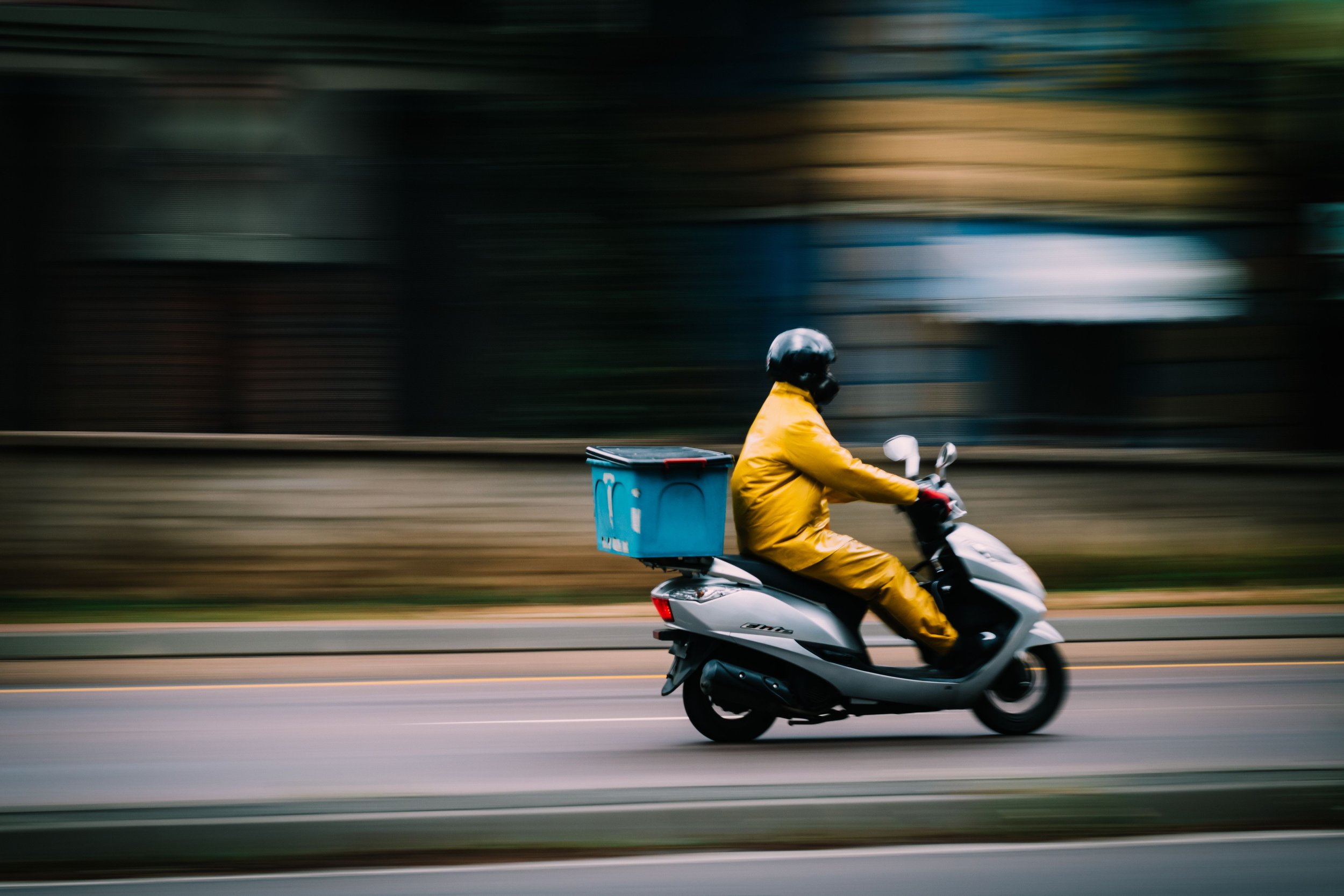
Delivery work exposes drivers to a broad mix of dangers, from the obvious risk of collisions to the slower wear of repetitive tasks. Recognizing these hazards helps drivers document injuries accurately and understand what they may be entitled to claim.
The most frequent risks delivery drivers encounter include:
Traffic collisions ranging from minor fender benders to serious multi-vehicle crashes.
Slips and falls while entering and exiting the vehicle or navigating stairs and porches.
Lifting and carrying injuries from handling heavy packages, coolers, or oversized items.
Repetitive strain in the back, shoulders, and knees from constant loading and unloading.
Weather-related hazards including heat exposure, ice, and poor visibility.
Dog bites and property hazards encountered at unfamiliar delivery locations.
Back injuries are especially common given the constant lifting the job demands, and the firm's overview of workers' compensation for back injuries explains how these claims are handled. Because so much of a driver's day happens away from a fixed workplace, coverage often hinges on the rules around injuries sustained during workplace travel.
Traffic exposure is the risk that sets delivery work apart from most other jobs. A driver may spend the majority of a shift on the road, sharing space with distracted motorists, navigating unfamiliar neighborhoods, and stopping frequently in less than ideal conditions. Each stop adds another opportunity for injury, whether it is stepping off a curb, reaching into a cargo area, or hurrying up a slick set of steps to meet a delivery window. The cumulative effect of these small physical demands, repeated hundreds of times a week, can be just as damaging as a single serious accident. Drivers who understand this pattern are better positioned to document gradual injuries that might otherwise be dismissed as ordinary wear and tear.
What Food and App-Based Drivers Should Know
App-based food delivery occupies its own corner of the classification debate, and the answers are not always intuitive. Drivers who split their week across multiple platforms may find their coverage varies from one gig to the next.
The firm addresses this directly in its discussion of whether food delivery drivers are eligible for workers' comp, which is essential reading for anyone earning income through delivery apps. For those who drive commercial routes or operate larger vehicles, the firm's guide to what truck drivers need to know about workers' compensation claims covers considerations specific to that segment of the industry.
App-based drivers should also pay attention to how their platform describes their status and what protections, if any, it offers. Some platforms provide limited occupational accident coverage that is not the same as traditional workers' compensation, and the differences can be significant when it comes to the scope of benefits and how disputes are resolved. Reading the terms carefully before an injury happens, rather than after, gives drivers a clearer picture of where they truly stand. When the answer is uncertain, and it often is in this area, professional guidance can help translate confusing policy language into a practical understanding of your rights.
Steps to Take After a Delivery-Related Injury
If you are hurt while making deliveries, acting quickly and carefully protects both your health and your claim. The following steps give your case the strongest possible footing.
Here are five steps every delivery driver should take after an on-the-job injury:
1. Ensure Your Safety First
Move to a safe location if you are on the road and call emergency services if the situation warrants immediate help.
2. Report the Injury Immediately
Notify your employer or platform without delay, because prompt reporting is often required and helps establish that the injury happened during work.
3. Document the Scene and Your Condition
Photograph the location, your vehicle, and any hazards, and keep a written account while details are fresh, following the firm's guidance on how to report a workplace injury.
4. Get Medical Care Promptly
Seek treatment quickly so a professional can document your injuries and link them to the incident.
5. Clarify Your Employment Status
Determine how you are classified early, since this shapes what benefits you can pursue and what evidence you may need.
Handling these steps carefully helps ensure that a difficult day on the road does not turn into a lost opportunity to recover what you are owed.
Special Considerations for Company Vehicles
Not every delivery driver uses a personal car. Many operate company-owned vans or trucks, which introduces additional questions about liability and coverage when an accident happens.
If you drive an employer's vehicle, the circumstances of a crash can affect both your workers' compensation claim and other potential avenues of recovery. The firm's discussion of what happens if you are hurt driving the company car walks through these scenarios and helps drivers understand where they stand when the vehicle belongs to the business rather than to them.
There is also the question of third-party liability. If another driver caused your crash, you may have a claim against that person in addition to any workers' compensation benefits you receive. These situations can become complicated quickly, because the workers' compensation insurer may seek reimbursement from a third-party recovery, and the interplay between the two claims requires careful handling. For delivery drivers who are constantly exposed to the actions of other motorists, this scenario is far from rare. Understanding that both paths may be available prevents drivers from settling too quickly or leaving benefits on the table simply because they were unaware of their full range of options.
Conclusion
Delivery drivers face a unique combination of legal complexity and physical risk, and the rules governing their rights continue to evolve. Understanding your classification, documenting injuries thoroughly, and knowing how California law applies to your situation are the keys to protecting yourself on the road.
If you have been injured while making deliveries and are unsure of your rights, the team at Cole Fisher can help you sort through the classification questions and pursue the benefits you may be entitled to. Contact the firm today to discuss your case.
Cole, Fisher, Cole, O’Keefe + Mahoney is Central California’s leading workers’ compensation and social security disability law firm. With over 30 years of successful experience, we are committed to securing maximum benefits for our clients in the Fresno, California area. Schedule a free consultation today.






© 2025 Cole, Fisher, Cole, O’Keefe + Mahoney
Making a false or fraudulent workers’ compensation claim is a felony subject to up to five years in prison, or a fine of up to $150,000 or double the value of the fraud, whichever is greater, or by both imprisonment and fine.