
Common Workers' Compensation Injuries and Prevention for Warehouse Workers
Warehouses are the engines of modern commerce, moving the goods that fill store shelves, online orders, and delivery trucks across California. But the pace and physical demands that make warehouses efficient also make them dangerous. Workers lift, bend, reach, and move through busy spaces filled with heavy equipment, and even a single misstep can lead to a serious injury.
This guide walks through the most common warehouse injuries, the steps workers and employers can take to prevent them, and what to do if you're hurt on the job. Whether you're new to warehouse work or a longtime employee, understanding these risks is one of the most effective ways to protect your health and your livelihood.
Why Warehouse Work Is High-Risk
Warehouse environments combine several factors that, taken together, produce elevated injury rates compared to many other industries. Workers handle heavy loads repeatedly throughout a shift, often under time pressure and sometimes in crowded aisles shared with forklifts and conveyor systems. The work is physically repetitive, which builds up wear and tear on muscles, tendons, and joints even when no single movement seems dangerous.
On top of the physical demands, warehouses have shifted in recent years toward faster turnaround times, automation, and seasonal surges that push workers to higher volumes with tighter deadlines. This can create pressure to skip safety steps or push through early warning signs of injury. Our analysis of workers' compensation claims in high-risk industries shows how these patterns affect injury rates and claim outcomes across sectors like warehousing, manufacturing, and construction.
Most Common Warehouse Injuries
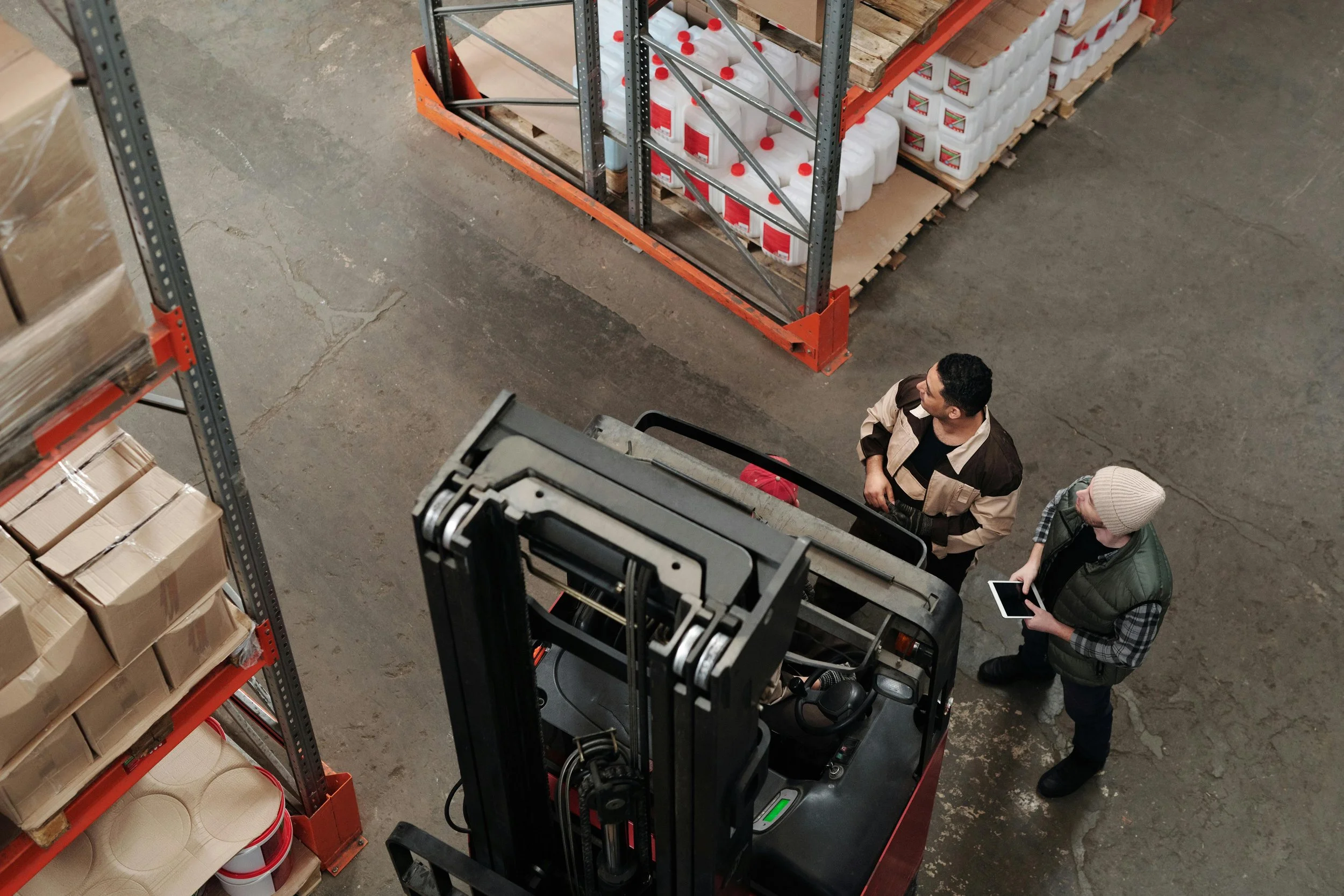
Warehouse injuries tend to fall into a handful of recurring categories. Recognizing them is the first step toward prevention, and it also helps workers identify when a medical condition may actually be work-related and eligible for compensation. For a deeper breakdown, our article covering the six most common injuries for warehouse workers offers additional detail.
The most frequently reported warehouse injuries include:
Back and spinal injuries from lifting heavy items, twisting while carrying loads, or reaching awkwardly into high shelves
Repetitive strain injuries such as tendonitis, carpal tunnel syndrome, and shoulder impingement from constant scanning, packing, and sorting motions
Slip, trip, and fall injuries caused by wet floors, loose pallets, cluttered aisles, or poor lighting
Forklift and powered equipment accidents, including collisions, tip-overs, and injuries to pedestrians struck by moving equipment
Struck-by and caught-between injuries from falling boxes, collapsing stacks, or equipment pinning a worker against fixed structures
Heat-related illnesses in warehouses without adequate climate control, particularly during California's hot months
Lacerations, punctures, and crush injuries from box cutters, broken pallets, strapping material, and loading dock activity
Back injuries deserve particular attention because they're one of the most common reasons warehouse workers file claims and one of the hardest injuries to fully recover from. Our detailed resource on workers' compensation for back injuries covers the treatment and benefits available for these cases.
Prevention Strategies for Warehouse Workers
While no workplace is risk-free, warehouse injuries are largely preventable when workers and employers pay attention to the right habits and safeguards. The following strategies can dramatically reduce your personal injury risk and help you build a longer, healthier career in warehouse work.
1. Master Proper Lifting Techniques
The phrase "lift with your legs, not your back" is common for good reason. Proper lifting form, including keeping the load close to your body, bending at the knees, and avoiding twisting while carrying weight, prevents a significant share of warehouse back injuries.
Take the time to learn and consistently use correct technique, even when you're tired or rushing near the end of a shift. Our article on whether proper lifting technique can save your back pain dives deeper into form fundamentals and common mistakes.
2. Use Personal Protective Equipment Consistently
Safety glasses, steel-toed boots, gloves, back supports, and high-visibility vests aren't optional add-ons. They're essential tools that have been proven to reduce injury severity when accidents do occur.
Make sure your PPE fits correctly, is in good condition, and matches the task you're performing. For more on selecting and using protective gear effectively, see our guide on personal protective equipment as a crucial defense for worker safety.
3. Take Regular Breaks and Rotate Tasks
Repetitive motion injuries develop over weeks and months, not minutes, and they can be career-ending if ignored. Building in short breaks to stretch and rotating between different tasks when possible gives your muscles and joints a chance to recover.
If your employer allows job rotation, take advantage of it. Our resource on how to reduce repetitive strain injuries for workers offers specific techniques for protecting your body over the long term.
4. Stay Aware of Equipment and Coworkers
Forklifts, pallet jacks, conveyors, and automated systems move through warehouses constantly. Staying alert to their presence, using designated walkways, and making eye contact with equipment operators before crossing their path prevents many of the most serious warehouse accidents.
Never assume an operator has seen you. Even well-trained forklift drivers have blind spots, and a two-second distraction on either side is all it takes for a life-changing collision.
5. Report Hazards Immediately
Spilled liquid, a damaged pallet, a blocked emergency exit, or malfunctioning equipment should be reported the moment you notice them. Many warehouse injuries happen when workers walk past a known hazard assuming someone else will handle it.
Prompt reporting protects you, your coworkers, and anyone who comes through the area after you. It also creates a record that can be critical if an injury later occurs in that area.
Our article on ways to keep yourself safe when working in a warehouse expands on these habits and adds additional practical tips. Putting these strategies into daily practice is the single most effective thing a warehouse worker can do to protect their body and career.
Employer Responsibilities in Warehouse Safety
Workers can only do so much on their own. California law requires warehouse employers to provide safe working environments, and that obligation covers a wide range of specific responsibilities. Employers must maintain equipment, train workers in safe operation, provide appropriate PPE, and comply with Cal/OSHA standards for industrial operations.
Employers are also required to investigate incidents, address known hazards, and avoid retaliating against workers who report safety concerns or file workers' compensation claims. When a warehouse cuts corners, employees are typically the ones who pay the price, sometimes literally with their health. If you suspect your employer is failing to meet these obligations, documenting the issues and consulting an attorney can protect your rights while also improving conditions for your coworkers.
What to Do if You're Injured in a Warehouse
Even in the best-run warehouses, injuries happen. If you're hurt on the job, the first priority is always medical care. Report the injury to your supervisor as soon as possible, seek appropriate medical attention, and make sure the injury is documented in writing.
California workers' compensation covers medical treatment, wage replacement, and other benefits for warehouse workers injured in the course of their job duties. The steps you take in the first hours and days after an injury often shape the entire trajectory of your claim. Our guide on essential steps to take after a workplace injury walks through the immediate actions that protect both your health and your legal rights.
Conclusion
Warehouse work will always involve physical demands and some level of risk, but serious injuries don't have to be an accepted part of the job. By understanding the common hazards, applying consistent prevention strategies, and knowing your rights if something does go wrong, you can protect yourself throughout a long warehouse career.
If you've been injured in a California warehouse and are facing medical bills, lost wages, or pushback on your claim, consider speaking with a qualified workers' compensation attorney. You deserve to recover with the full benefits the law provides, and the right support can make all the difference.
Cole, Fisher, Cole, O’Keefe + Mahoney is Central California’s leading workers’ compensation and social security disability law firm. With over 30 years of successful experience, we are committed to securing maximum benefits for our clients in the Fresno, California area. Schedule a free consultation today.





© 2025 Cole, Fisher, Cole, O’Keefe + Mahoney
Making a false or fraudulent workers’ compensation claim is a felony subject to up to five years in prison, or a fine of up to $150,000 or double the value of the fraud, whichever is greater, or by both imprisonment and fine.